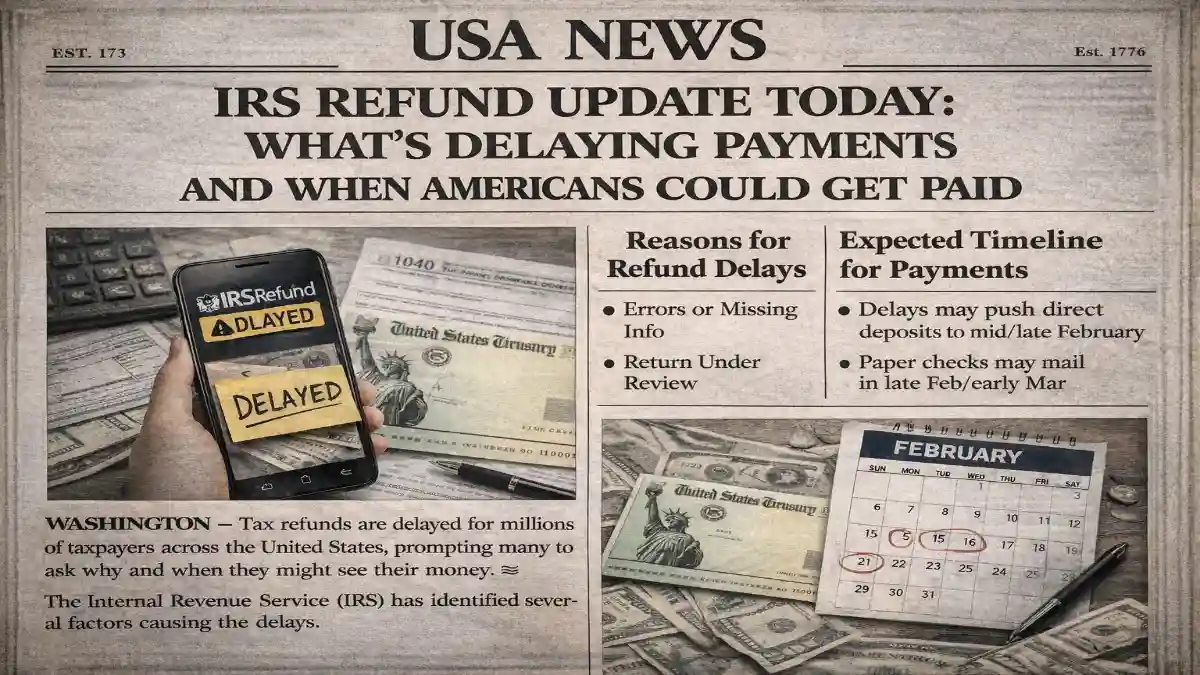
Millions of Americans are closely watching their bank accounts as tax refunds continue to roll out this season. The Internal Revenue Service says refunds are being issued steadily, but a range of common factors is slowing payments for some taxpayers.
What’s Delaying IRS Refund Payments
Most delays are caused by additional review steps rather than a systemwide issue. Returns that include refundable tax credits, income adjustments, or discrepancies between reported income and employer records often require extra verification. These checks are intended to improve accuracy and prevent improper payments.
Paper-filed returns and amended returns typically take longer as they require manual processing, unlike electronic filings that move through automated systems.
Filing Method Makes a Big Difference
How you file plays a major role in refund timing. Taxpayers who file electronically and choose direct deposit are usually paid faster. Electronic returns process more efficiently, and direct deposit avoids postal delays.
Those who file by mail or request paper checks often wait longer, even after their refund is approved.
When Americans Could Get Paid
For most electronic filers who select direct deposit, refunds are issued within up to 21 days after the return is accepted. Returns accepted in late January or early February often see payments arrive in February, depending on review status and bank processing times.
There is no single nationwide payment date. Refunds are released on a rolling basis, so timing varies for each taxpayer.
Bank Processing and Other Timing Factors
Even after the IRS sends a refund, banks may take additional time to post deposits. Weekends and federal holidays can also delay availability of funds.
A refund status showing “processing” simply means the return is under review and does not automatically indicate a problem.
How to Check Your Refund Status
Taxpayers can track refund progress using official IRS tools. Status updates typically move through stages showing when a return is received, approved, and sent, and are refreshed once per day. Checking more often will not speed up the process.
If additional information is needed, the IRS will contact taxpayers directly by mail.
What Taxpayers Should Do While Waiting
To avoid further delays, do not file duplicate returns or submit unnecessary amendments. Double-check that personal information and bank details are accurate, and respond promptly to any IRS requests for documentation.
What to Expect Next
Refund payments will continue as returns complete processing. While many Americans will receive payments soon, others may experience delays due to verification or filing method.
Staying informed and tracking refund status through official channels remains the best way to know when your IRS refund payment is likely to arrive.